
This article explains the difference between absorbable and non-absorbable sutures in clear, practical terms. It covers how each suture type behaves i
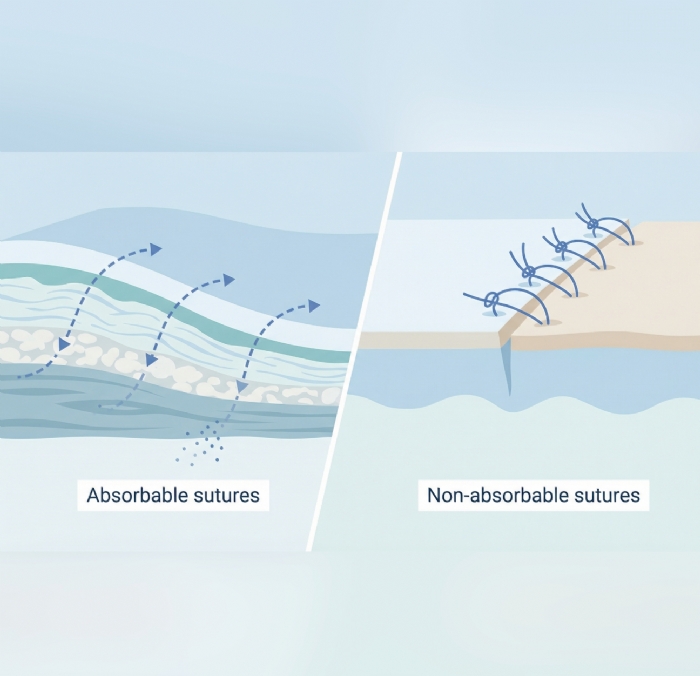
Absorbable sutures are designed to break down in the body over time, while non-absorbable sutures are made to stay in place long term and usually need removing once healing is complete.
What are absorbable sutures?
Absorbable sutures are made from materials the body can gradually break down, such as catgut or synthetic polymers like polyglycolic acid and polylactic acid. They lose tensile strength over a defined period and are then metabolised, so there is no need for a separate appointment to remove them. These sutures are typically used for internal tissues or wounds that heal relatively quickly, for example in gastrointestinal, gynaecological, urological and many plastic surgery procedures. They are also widely used in paediatric surgery to avoid the trauma and logistics of suture removal in children.
What are non-absorbable sutures?
Non-absorbable sutures are made from materials that do not break down in the body, such as silk, nylon and polyester. They are designed to maintain their strength over the long term and either remain in the body permanently or are removed once the tissue has healed sufficiently. Clinicians typically choose them for tissues that need durable support or heal slowly, including cardiovascular, orthopaedic, dermatological and some ophthalmic procedures. They are also commonly used for external skin closure in high-tension or high-movement areas where prolonged mechanical support is needed.
Key differences at a glance
| Feature | Absorbable sutures | Non-absorbable sutures |
|---|---|---|
| Longevity in body | Break down and are absorbed over time | Remain intact indefinitely unless removed |
| Need for removal | No routine removal needed | Usually require removal after healing |
| Support duration | Short- to medium-term support | Long-term or permanent support |
| Typical use | Internal tissues, faster-healing wounds | Skin, slow-healing or high-stress tissues |
| Common materials | Catgut, polyglycolic acid, polylactic acid, other polymers | Silk, nylon, polyester, polypropylene |
| Follow-up implications | Fewer visits because there is no suture removal appointment | Follow-up needed for suture removal and wound monitoring |
When absorbable sutures are preferred
Absorbable sutures are chosen when the tissue only needs temporary support and accessing the site again would be difficult or undesirable. They are ideal for internal organs and deep tissue layers, for example in gastrointestinal anastomoses or gynaecological and urological surgery. They are also useful in well-vascularised skin where healing is rapid, and in paediatric cases where avoiding a second procedure is a clear advantage. For many patients, an added benefit is convenience and comfort, since there is no suture removal appointment.
When non-absorbable sutures are preferred
Non-absorbable sutures are selected when tissue needs long-term reinforcement or where failure of the closure would have serious consequences. This includes cardiovascular surgery, orthopaedic repairs of tendons and ligaments, and some neurosurgical procedures where lasting tensile strength is essential. They are also widely used for external skin closure, particularly in high-tension or mobile areas, and in cosmetic, ophthalmic and some dental surgery where precise, durable approximation is required. Because they stay in place, they allow clinicians to decide exactly when to remove them once they are satisfied with wound healing.
28/02/2026